
Inclusive Research: Debunking Myths and Getting Started

Summary
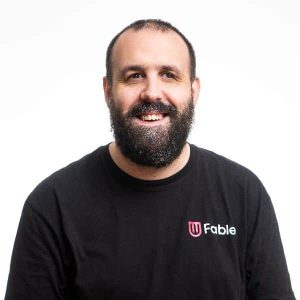
Ever heard that accessibility research is too expensive? Too time-consuming? Or that you need a massive sample size to see real insights? These misconceptions stop too many UX researchers from taking the first step toward inclusive design. But here’s the truth: accessibility research is often simpler, faster, and more impactful than you think. In this interactive session, Samuel Proulx, Accessibility Evangelist at Fable, will demonstrate the actual reality behind the biggest myths that hold teams back, through a hands-on look at what accessibility research actually looks like. You’ll experience a real research interview with an assistive technology user and gain practical insights into how Fable’s UX researchers prepare for and conduct accessibility studies. By the end of this session, you’ll see that getting started doesn’t require a huge budget, complex logistics, or a massive sample size, just the willingness to take the first step. Join us to demystify accessibility research and leave empowered to integrate it into your own work.
Key Insights
-
•
Heading structure is critical for screen reader users to orient themselves, as headings act like a table of contents.
-
•
Screen reader users rely heavily on detailed alt text and product descriptions to understand items, especially for complex products like spices.
-
•
Hover menus are often inaccessible because keyboard and screen reader users cannot reveal submenu items that appear only on mouse hover.
-
•
Effective accessibility research requires participants who talk aloud and verbalize their screen reader interactions to provide clear feedback.
-
•
Researchers need training to avoid interrupting or overlapping with screen reader voices during live sessions.
-
•
There must be flexibility in research sessions to respond to participant distress or usability roadblocks instead of rigidly following scripts.
-
•
A robotic, high-speed screen reader voice is preferred by blind users for faster content consumption compared to natural-sounding voices.
-
•
Fable offers a subscription-based platform that streamlines recruiting screen reader users for ongoing accessibility research with quick turnaround.
-
•
Verbal confirmations from researchers during sessions validate participant input without disrupting their navigation or flow.
-
•
Building rapport and a relaxed atmosphere helps ease participants’ frustrations and encourages honest, valuable feedback.
Notable Quotes
"I kind of use headings to get an overview of what's on a page, like a table of contents."
"When I pressed enter it said product added to cart, but I had to check if it was actually the right product."
"Ideally it should say about collapsed and then you press enter and it says expanded, so you know more options are available."
"I use a very robotic kind of unnatural sounding voice because I want to listen as fast as possible for efficiency."
"Participants who do this kind of research are happy to answer questions about how they use assistive technology."
"You have to avoid speaking when the screen reader is speaking, which takes some training to get used to."
"If distress does happen in sessions, it’s easier to talk through it using humor or a personable approach."
"Hover menus reveal options on mouse hover, which isn't accessible to keyboard or screen reader users."
"Not every task has to be completed; if a participant can’t find a way, that means the experience can be improved."
"Ongoing accessibility research is essential because the product is always changing, and new things always need testing."
Or choose a question:














More Videos

"Design research should be involved in setting early policy vision, not just in delivering on it later."
Frances Yllana Ann Buechner Jess Jones Betsy RamacciaD.E.A.R.R. Diaries (Discipline, Experience, Architecture, Reflection + Revolution)
November 16, 2022

"The community of practitioners is the way we carry each other through difficult moments."
Bria AlexanderTheme Two Intro
September 8, 2022

"All commercially available facial recognition software perform worse on darker females."
Dr. Jamika D. BurgeBroad Strokes: Connecting Design, Research, and AI to the World Around Us
June 7, 2023

"Our brains are wired for efficiency and use heuristics, so they prefer daydreaming over hard conversations."
Joshua GravesWe Need To Talk: Navigating Conversations with Your Boss (Part 1 of 3)
April 14, 2025

"You have to socialize service design within organizations considering their dominant logic — whether engineering, clinical, or commercial."
Lavrans Løvlie Ben ReasonAsk me anything – Authors of Service Design: From Insight to Implementation
November 19, 2025

"Researchers are translators, storytellers, facilitators, and bridge builders. I love that bridge-building dimension."
Rebecca BuckMission: Keep Talent in Research Roles!
March 10, 2021

"Language, language, language—using familiar company terms helped teams feel comfortable adopting and practicing the experience principles."
Sarah WilliamsVerizon_A Framework for CX Transformation
January 8, 2024
"The program page has a time zone selector so everyone can attend sessions on their local time without confusion."
Bria AlexanderOpening Remarks
September 9, 2022

"Partnering with market researchers allowed us to ask specific product questions within their long-running exit survey."
Joanna Vodopivec Prabhas PokharelOne Research Team for All - Influence Without Authority
March 9, 2022








