
Don’t Make Me Think 3.0: What Endures and What Evolves in UX
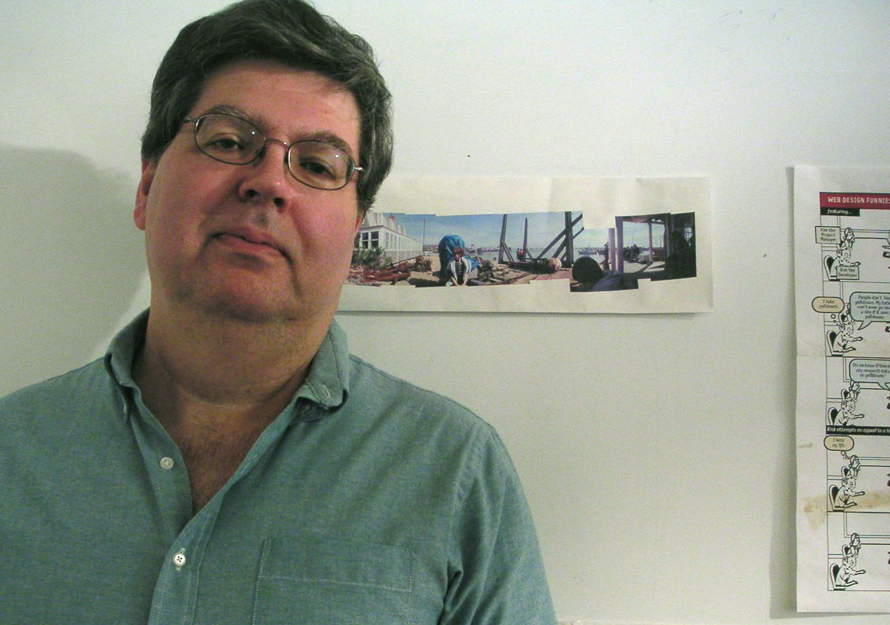

Summary
Key Insights
-
•
Steve Krug has been secretly working on Don't Make Me Think 4.0 for 5-6 years, planning release soon.
-
•
AI will serve as power steering in UX work, speeding tasks but not fully replacing human judgment.
-
•
Simulated users and AI-generated personas are ineffective substitutes for watching real user interactions.
-
•
UX professionals must maintain ethical standards and advocate for users amid economic and technological pressure.
-
•
There is uncertainty about the future job market and roles in UX and research due to AI and automation.
-
•
Deep understanding of AI—its strengths and limitations—is crucial for future-proofing UX careers.
-
•
Ethical tension exists between AI’s economic drivers and the need for responsible, user-centered design.
-
•
The UX minor at University of Michigan shows rapid growth, indicating domain knowledge blending with UX is emerging.
-
•
Current AI hype overestimates AGI capabilities; AGI is not expected in the foreseeable future.
-
•
UX work will shift more toward education and coaching as AI democratizes some labor but can't replace empathy.
Notable Quotes
"The first rule of book update club is you never talk about book update club."
"Unlike social media, which I think should not exist, AI should exist but with caution."
"I feel like we are the user advocates. Our job is to be on the side of the angels and the users."
"It’s not self-driving cars, it’s power steering."
"Simulated users is pure enshittification. It’s not worth the paper it’s printed on."
"There’s no reasonable prediction that AGI will exist in our lifetimes."
"You can do stuff faster, but that doesn’t mean it’s gonna do the job as well."
"Most of our job is education — teaching people what AI is good for and what it’s not."
"Things are gonna get a lot worse before they get worse."
"Empathy is key to wanting to do this job — wanting users to do well."
Or choose a question:
















More Videos

"For every single component, we start with its purpose and emergent need to ground design in user experience."
Dave Malouf Amy ThibodeauPanel: Design Systems and Documentation
November 7, 2017

"AI tools have never made it easier to add flourishes like animations or excitement to your UI."
John DonmoyerShipping your code generation experiments to production
June 11, 2025

"It can be really hard to tell what is AI and what isn’t, and your average user may not know the difference."
Clara Kliman-SilverUX Futures: The Role of Artificial Intelligence in Design
June 7, 2023

"Don’t dress for the job you have, dress for the job you want—this applies to people and companies alike."
Mark TempletonCreating a Legacy: the ultimate experience
June 9, 2017

"Artifacts of the future help us envision and grasp the change that we’re hoping to have—it’s not just bullet points or vision statements."
Sarah GallimoreInspire Progress with Artifacts from the Future
November 18, 2022

"The best way to build a fully accessible foundation is to involve the voices of people with disabilities at every step."
Sam ProulxPrototype Reviews, People With Disabilities, and You
December 8, 2021

"If you have a sense of ownership in the work, you naturally feel more engaged with the outcome and output."
Anna Nguyen Emily BroganWhy Our Voice of the Customer is Better Than Yours
March 10, 2022

"We are not just trying to get a seat at the table, we want to get a voice at the table."
Anna Poznyakov Richa PrajapatiGet The Most Out Of Stakeholder Collaboration—and Maximize Your Research Impact
March 12, 2021

"The leadership response in business often has to be: we will make the best decision possible given what we know."
Nalini P. KotamrajuTwo Jobs in One: Being a “Leader who is a Researcher” and a “Researcher who is a Leader"
March 10, 2021
Latest Books All books




Dig deeper with the Rosenbot
Why is design education’s emphasis on critical making important, and how does it interrelate with critique and theory?
What role should AI play in user research tools, and how do you manage associated risks and accountability?
What are the challenges of self-assessment in work behaviors and how can they be mitigated?