
Day 3 Theme Panel
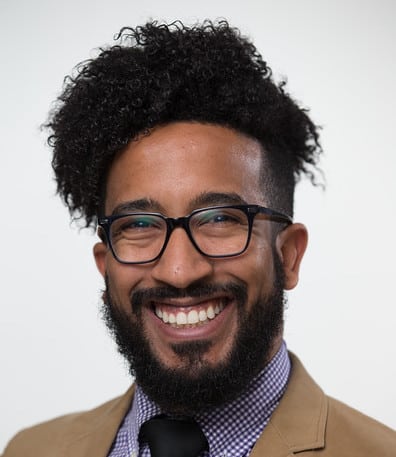
Eduardo Ortiz
CEO and Founding Owner, Coforma

Robin Beers
Founder, Ubuntu Culture Company

Rachael Dietkus, LCSW
Digital Services Expert in Design & Social Work, United States Digital Service

Bruce Gillespie
Associate Professor, Faculty of Liberal Arts, Wilfrid Laurier University

Jess Greco
Director, Product Experience Design, Mastercard

Marieke McCloskey
Director of UX Research, LinkedIn

Renee Reid
Staff UX Design Researcher, LinkedIn
Summary
In this end-of-day panel, Rachel, Bruce, Robin, Jess, Mari, and Renee engage in a rich conversation about empowering UX researchers. Rachel highlights the importance of collaborative audits involving teams rather than individuals and advocates for proactive partnerships with legal teams to navigate guardrails effectively. Bruce and Robin emphasize blending numbers with storytelling, integrating data analytics and qualitative research to enhance credibility and impact. Robin shares a personal story illustrating the power of skilled facilitation and managing reactivity when facing qualitative data skepticism. Jess discusses the unique challenges marginalized groups face in claiming power, endorsing strategies like Shine Theory to build alliances and visibility. Mari reflects on measuring research impact beyond metrics, advocating for storytelling and qualitative successes. Rachel further explores managing trauma and harm in research contexts and stresses proper attribution and honoring historical roots in knowledge sharing. Mari discusses maintaining fresh and relevant research repositories, noting how generative AI can revitalize old insights. Renee reframes the notion of reclaiming power by asserting researchers have always possessed it but need agency and internal organizational representation to amplify influence externally. The panel collectively encourages researchers to recognize their inherent power, cultivate cross-functional relationships, honor diverse voices, and use thoughtful storytelling and data integration to advance their craft.
Key Insights
-
•
Audits of research practices are more effective when conducted by small teams rather than individuals, ensuring diverse perspectives and shared responsibility.
-
•
Proactively building relationships with legal and privacy teams strengthens navigation of organizational guardrails and prevents reactive fire-fighting.
-
•
Data and numbers alone do not move audiences; pairing quantitative data with user stories or quotations provides the emotional context that drives action.
-
•
Collaboration between data analytics and user research teams produces more integrated, credible, and impactful insights.
-
•
Effective facilitation and managing one’s own emotional reactivity are crucial skills for UX researchers presenting qualitative findings, especially facing skepticism.
-
•
Marginalized groups face added risks and discomfort in claiming power, but building alliances and uplifting each other (e.g., through Shine Theory) increases visibility and influence.
-
•
Impact measurement in UX research needs to balance quantitative metrics with qualitative storytelling to fully capture value and success.
-
•
Proper attribution and honoring the lineage of knowledge are key in research storytelling, especially as curators of shared organizational insights.
-
•
Research insights have varying shelf lives; some findings endure for years while others are transient, requiring thoughtful curation in repositories.
-
•
Generative AI tools can refresh and personalize old research insights, making repositories feel current and more engaging for users.
Notable Quotes
"When I think back on audits, it was usually one individual doing it; I recommend at least having a team of two or three involved."
"Keep legal as a proactive partner, not just someone you call when there’s a problem; build those relationships early over coffee or casual chats."
"Just throwing numbers at people does not engage them; pairing data with personal stories or quotes makes the findings resonate."
"Some of the most impactful insights come from data analytics and user research collaborating to find behaviors seen in real people and aggregate data."
"I made the mistake of arguing in the chat instead of slowing down and asking the group what would make qualitative data persuasive for them."
"There’s more risk for marginalized people to claim power because of expectations to be silenced or punished, so it’s a calculated bet."
"We have to give ourselves space to tell impact stories that aren’t quantified; numbers don’t always capture the full picture of success."
"As researchers, we stand on the shoulders of many before us; attribution helps us honor that lineage and curiosity."
"Not every insight is eternal; some are tied to a specific prototype or test, while others about human nature last years."
"We haven’t lost our power as a discipline — we just need to reclaim agency and make others recognize the power we already hold."
Or choose a question:
















More Videos

"Accessibility ops is like design ops but focused on accessibility, including accessible tools and vendor requirements."
Suzan Bednarz Hilary SunderlandAccessibilityOps for All
January 8, 2024

"We want to deepen equity and care in how we work, who we do it with, and the output and impact it generates."
Ariel KennanTheme Two Intro
November 17, 2022

"Our vision was to create an AI first tool for user research that delivers instantly well structured requirements and design inputs."
Joerg Beringer Thomas GeisScaling User Research with AI: Continuous Discovery of User Needs in Minutes
June 10, 2025

"The market is a cultural mosaic diversifying faster than many teams can anticipate."
Kevin BethuneGatekeepers and Servant Leadership
January 30, 2020

"True success means designing teams for resilience so they’re ready for whatever season comes."
Mariesa LenzWhat Beekeeping Taught me about Product Teams
October 29, 2025

"Making space for subculture to thrive is like letting more air and sunlight in, it creates a healthier environment for everyone."
Spencer L. A. StultzWhy Social Justice Frameworks are Necessary for Successful DEI/JEDI Initiatives
October 4, 2023

"We have the responsibility to redistribute our power and include those who have a stake in the work we do."
Aaron Stienstra Lashanda HodgeLeveraging Civic Design to Advance Equity and Rebuild Trust in the US Federal Government
December 8, 2021

"We’re not going for perfection. We’re going for excellence and change."
Denise Jacobs Nancy Douyon Renee Reid Lisa WelchmanInteractive Keynote: Social Change by Design
January 8, 2024

"If I don’t have a map, I can’t see the landscape, I can’t see the patterns impacting it, and I’m left only with purpose and blind action."
Simon WardleyMaps and Topographical Intelligence
January 31, 2019








